
Every new hire asks the same questions in their first weeks, and your most experienced people stop their work to answer them, again.
Is this happening in your business?
- Senior people answer the same onboarding questions every month.
- Your documents exist, but nobody can find the right page.
- New hires wait hours for simple answers, or guess.
- Knowledge lives in people's heads and leaves when they do.
What it costs you
Each interruption is small, but it lands on the people whose time is worth the most. And every answer given in a chat message is lost again for the next person who asks.
How it works
- The new hire asks a question. In a simple chat, in their own words.
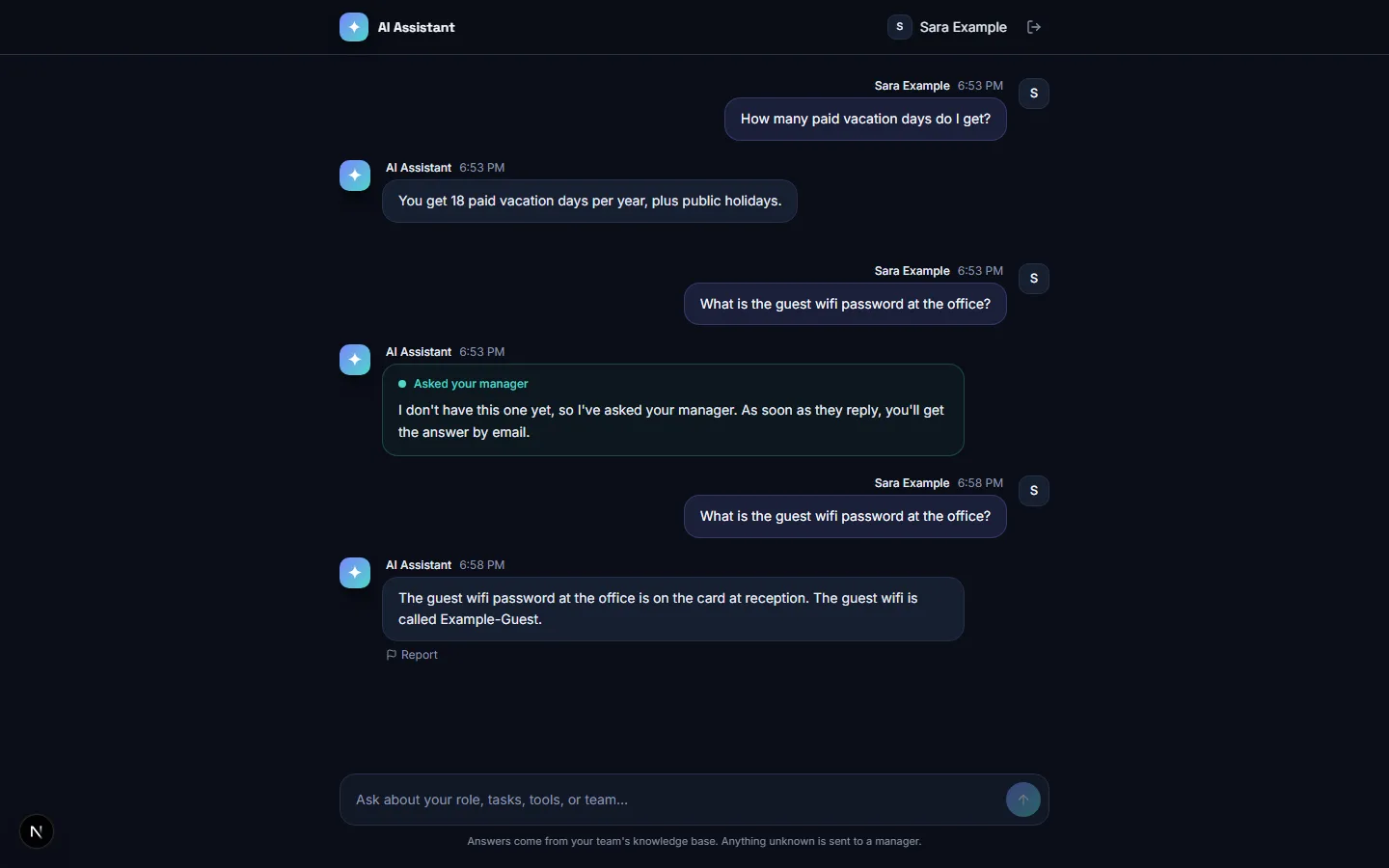
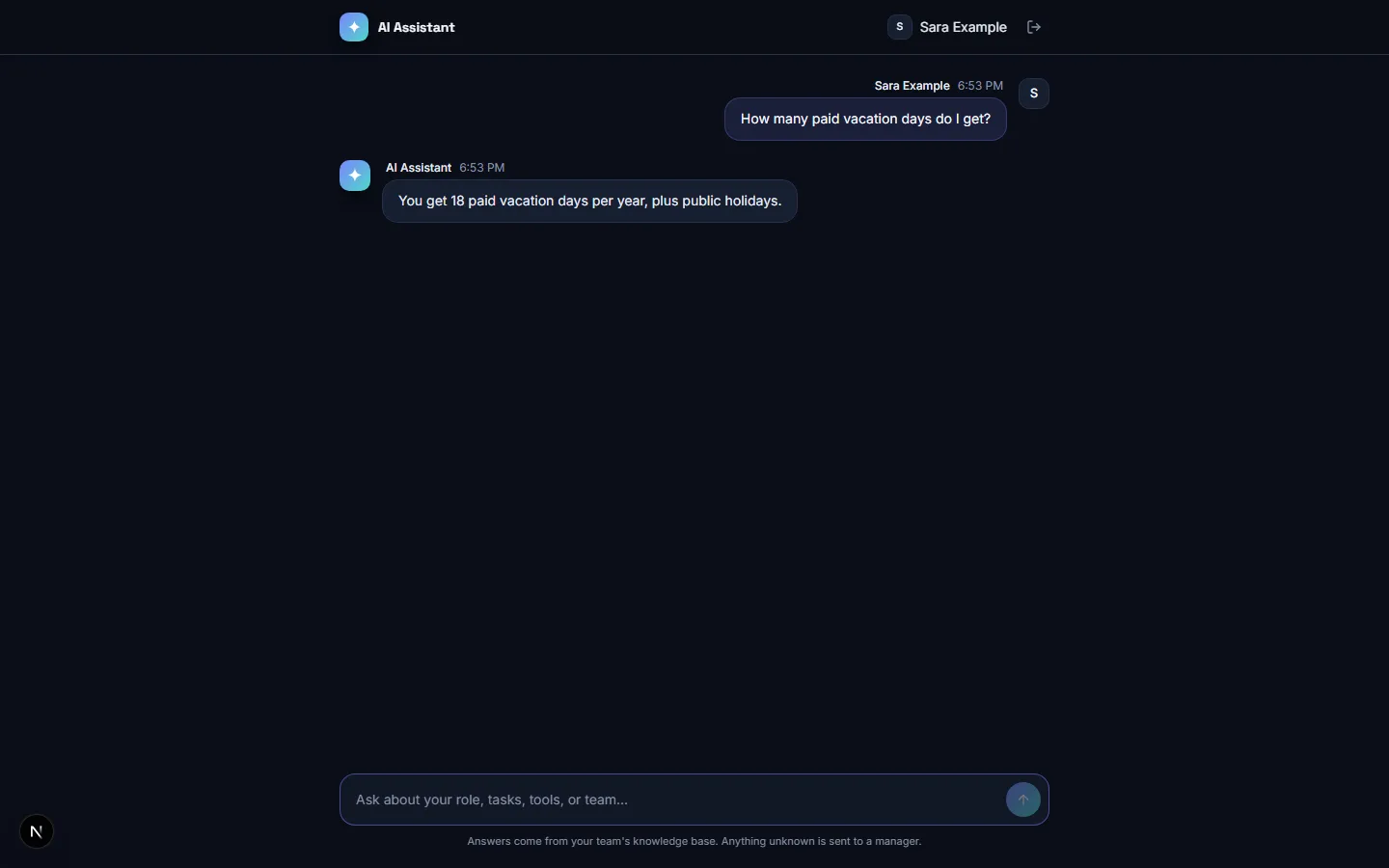
- It searches your documents. If the answer is in your handbook or policies, it answers from them, for example "18 paid vacation days per year".
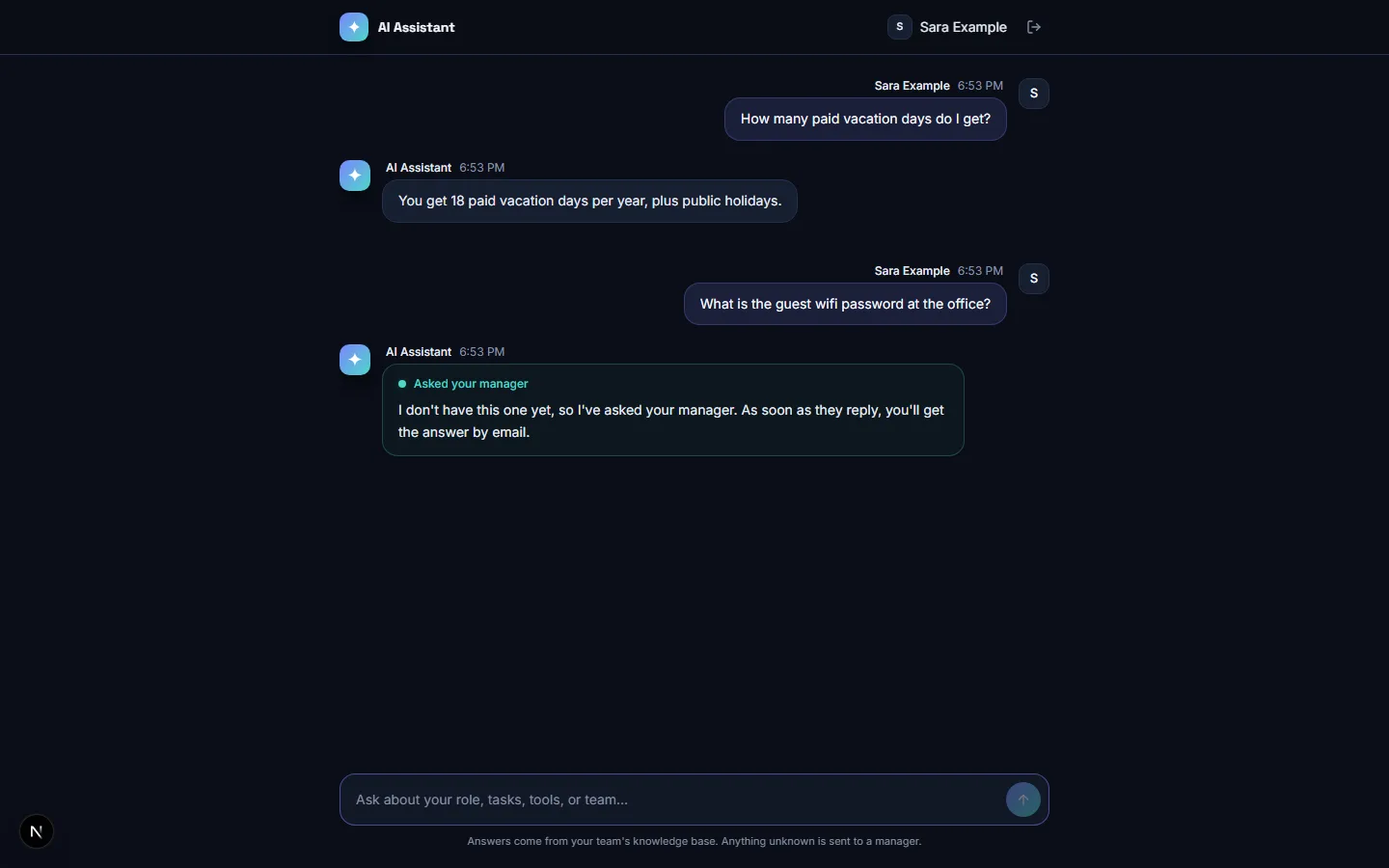
- Unknown? It asks a manager. Instead of guessing, it sends the question to a manager in Slack, and tells the employee they will get the answer by email.
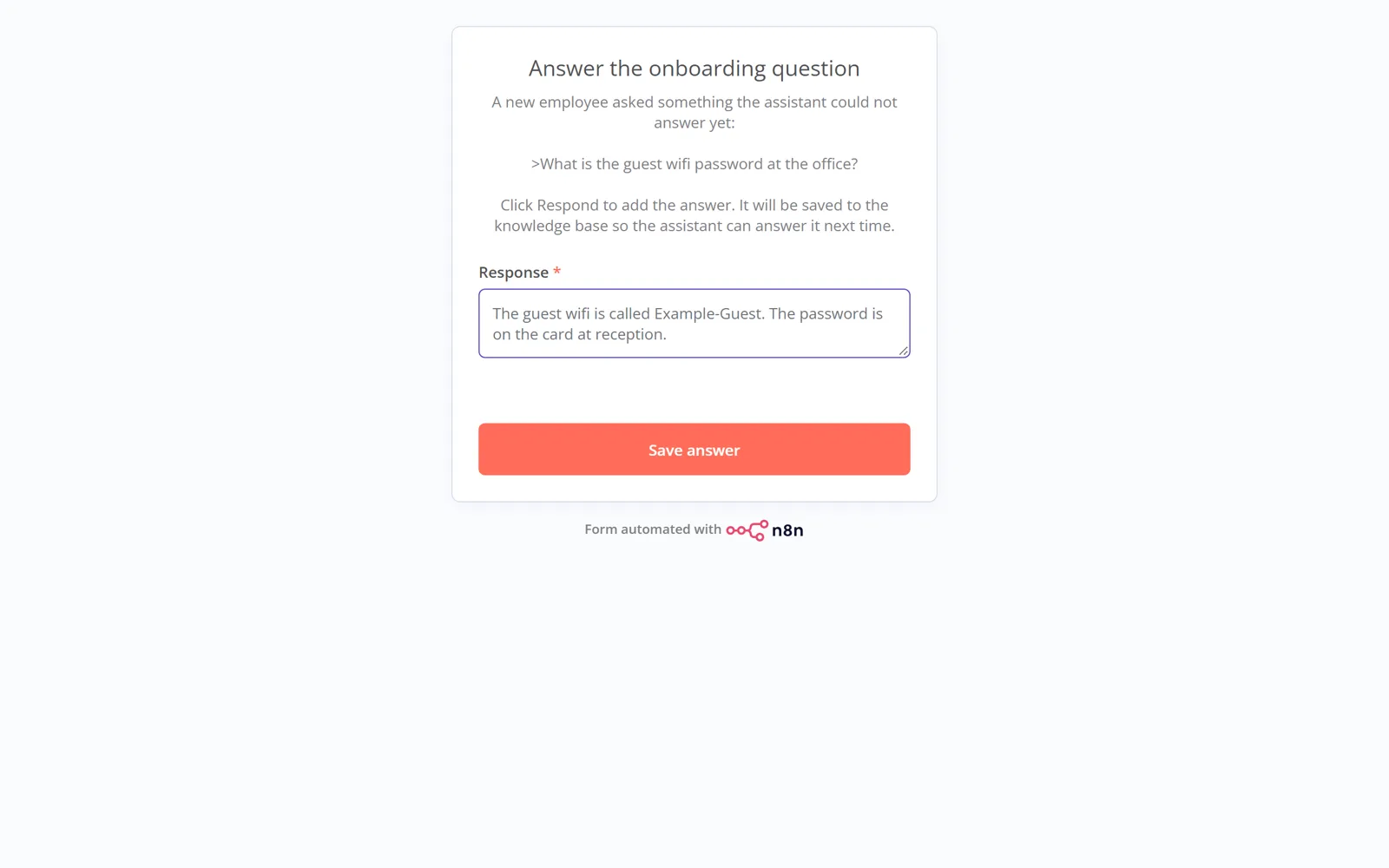
- The manager answers once. In a short form. The employee is emailed the answer.
- It learns. The answer is added to the knowledge base, so the next person who asks gets it instantly.
Before
- Managers answer the same questions every month
- Answers given in chat, then lost
- New hires wait or guess
After
- Known questions are answered at once, from your documents
- Each new answer is kept for the next person
- Managers only see questions nobody has asked before
Decisions that make it safe to use
- It never makes up an answer. If your documents do not cover it, it asks a person. That is the most important rule.
- A person approves what it learns. Only a manager's answer goes into the knowledge base.
- Employees can flag a wrong answer. Each answer has a Report button, so mistakes surface instead of spreading.
What it runs on
- Next.js: the chat app the employee uses, with a login.
- Supabase: the database: users, messages and the searchable knowledge base.
- n8n: runs the steps: search, answer, ask a manager, learn.
- An AI model: writes the answer, only from the documents it was given.
- Slack and Gmail: reach the manager and the employee.
Inside the run
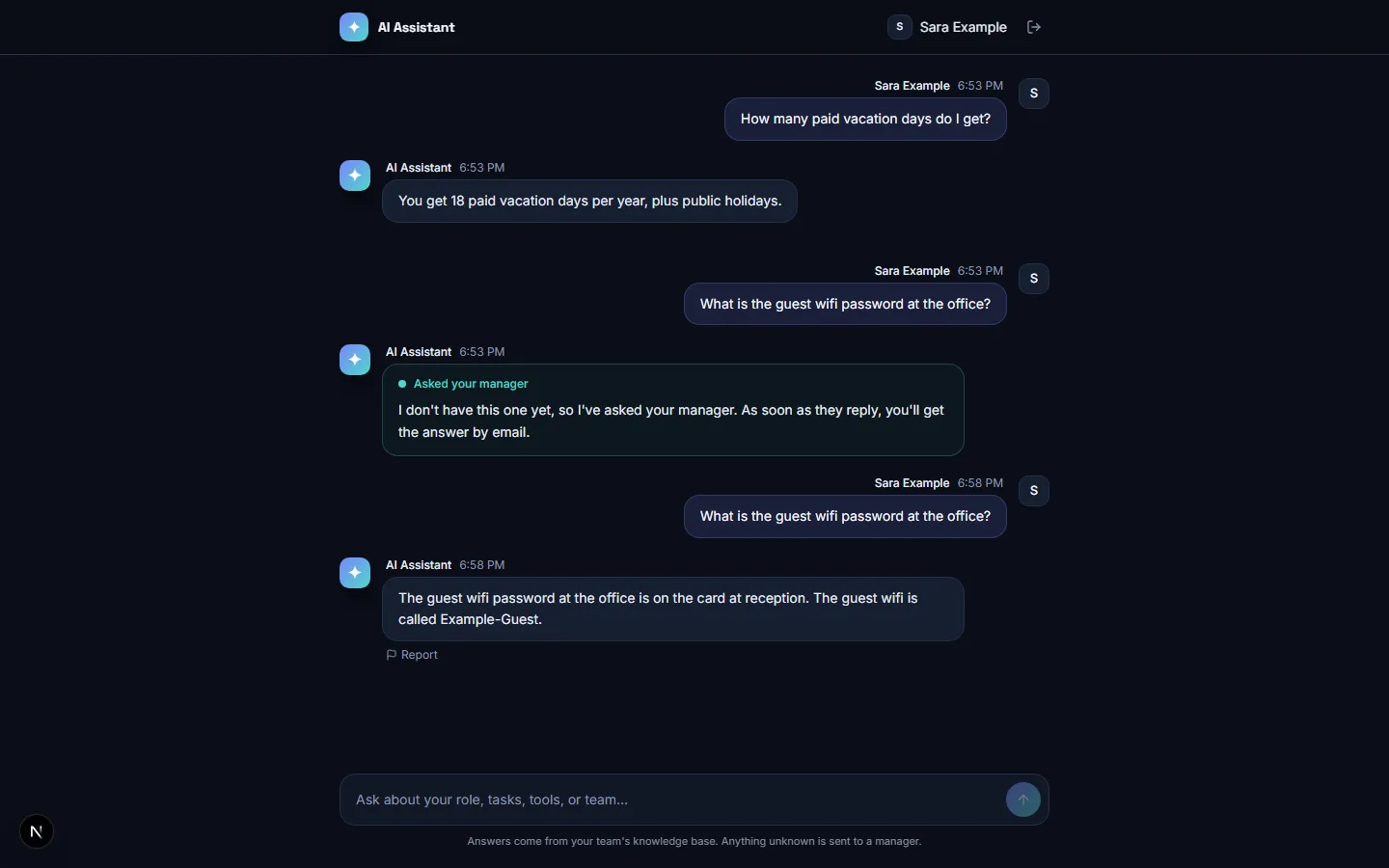
How it goes live in your business
It starts with your existing handbook, policies and FAQs, and grows from your managers' answers.
- Map the process with you. One call to walk through how the work happens today, who does what, and where it breaks. You get a one-page plan before anything is built.
- Build it on your accounts. The workflow connects to your own tools, with your own logins. Nothing runs through a shared account of mine, and you can switch it off at any time.
- Test with your real examples. We run it on a copy of your data and real past cases first, side by side with the way you work now, until the output is right.
- Go live with a safety net. Every failed step sends an alert to a person instead of failing silently, and anything uncertain is routed to a human.
- Hand over. You get a short guide to what it does, how to change the common things yourself, and what to do if a step fails.
Do your best people spend their day answering the same questions?
Describe the process in a short brief: what happens today, which tools are involved, and what "fixed" would look like. I read every brief and reply with whether I can fix it and how. Write a brief
Demo built and tested by me with a sample handbook and a made-up employee. It is not a client project. The code is public on my GitHub.